Science, technology, and imagining what should come next.
DASEINsight is an independent consultancy that helps technology firms, philanthropies, nonprofits, and policy institutions navigate emerging science and technology landscapes. We map the terrain. We measure how publics and consumers respond. And we use that evidence to imagine futures in which innovation moves society forward in ways that align with the goals of our clients.
Who we work with
Four sectors, one problem seen from different sides.
A company launching a product, a philanthropy funding the science behind it, a nonprofit contesting or defending it, and an agency writing the rules for it are all dealing with the same publics, the same information environment, and the same polarization. A firm that has worked all four sides sees the whole board, and that is what sets our advice apart from a sector specialist's.
Technology companies
Launching an AI product into a market that distrusts tech firms, and needing to know before launch how consumers, regulators, and critics will respond.
Philanthropies
Funding brain research, genome editing, or other frontier science that will be engulfed in controversy before the first results are in.
Nonprofits and advocacy organizations
Trying to be heard on vaccine safety, climate, or public health in an information environment that rewards whoever shouts loudest.
Government and policy institutions
Writing rules for a field that will have changed by the time they take effect, and that have to survive polarized legislatures and skeptical publics.
Who we have worked with
What we do
Four kinds of work, two questions underneath.
Every engagement comes back to the same two questions: where is this technology taking the publics and consumers you serve, and where should it be taking them? The first is an empirical question, the second is a question of imagination, and the work is in the iteration between them. The point of that work is practical: strategy and policy options that hold up in the real world and move innovation and society forward together rather than trading one off against the other.
Technology foresight and scenario mapping
Structured, evidence-based mapping of where a field is heading over a three- to ten-year horizon, from artificial intelligence and genome editing to brain organoids and synthetic biology. We separate the signal from the hype cycle, lay out the plausible futures and the branch points between them, and then ask the harder question of which of those futures is worth steering toward, given what the client is trying to achieve, and what the early indicators would be that we are, or are not, on the way there.
Data-driven forecasting of public response
Original survey research, experiments, and modeling that predict how different publics and consumers will react to a technology, a policy, or a product before it reaches them, and that test whether the future an organization is imagining is one those publics would accept. Built on more than 25 years of empirical work on public attitudes toward emerging science, and on the dispositional and value-based factors that drive acceptance, concern, and demand for regulation.
Governance and policy advisory
Independent advice on the societal guardrails a technology will need, who will demand them, and how to design governance that holds up across political and cultural fault lines rather than deepening them. The test is whether the resulting policy can actually be adopted, survives contact with the publics it affects, and leaves both the technology and the society it enters better off. We have advised on AI regulation, misinformation policy, and science advice at the national-academy and intergovernmental level.
Engagement strategy and executive briefings
Design of good-faith public engagement around contested science, in which publics help imagine the futures they would want rather than being polled about ones already decided, and concise, decision-ready briefings for boards, leadership teams, program officers, and policy staff who need to understand a fast-moving field, and how publics, regulators, and competitors are likely to respond to it, without becoming specialists in it.
How we work
Map. Measure. Imagine Futures.
The method is the same whatever the sector and whatever the technology. It is not a straight line from data to recommendation but a loop: the evidence disciplines the imagining, the imagining tells us what evidence to go and collect next, and we keep moving between the two until they agree.
Map the terrain
Where is the science actually going, who are the actors, and what are the real branch points? We draw on the peer-reviewed literature, expert networks across the United States and Europe, and direct experience inside the institutions that set research agendas, so that the futures we imagine later start from what is technically and institutionally real.
Measure the response
Not one public but many, and not only publics but consumers, funders, and regulators. We field original surveys and experiments to measure how specific audiences understand, trust, and respond to a technology, which values and dispositions predict that response, and what those audiences themselves would count as a better outcome, because a future that serves society has to be one society would choose.
Imagine the futures
We combine the map and the measurements into scenarios of what should come next, not only what could, and into forecasts and decision frameworks that a leadership team can act on, with explicit assumptions, confidence levels, and the signals that would tell you which future is arriving. What remains at the end is a set of strategy and policy options that the evidence supports, that stay viable in a period of deep technological disruption, political polarization, and policy dilemmas with no obvious pathway forward, that align with the client's goals, and that move innovation and society forward at the same time.
Principal
Dietram A. Scheufele
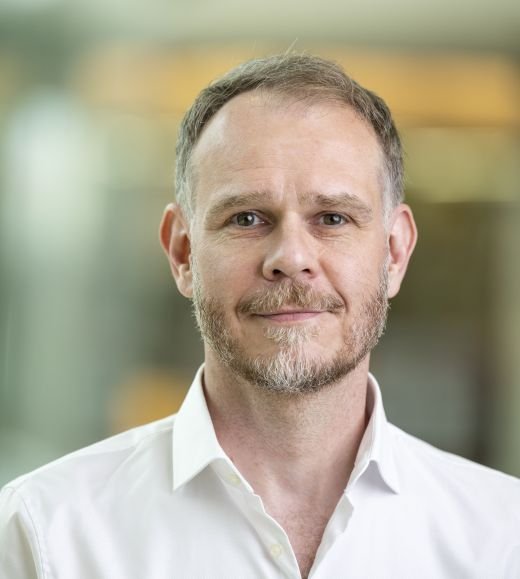
Dietram A. Scheufele founded DASEINsight after more than 25 years studying how societies make sense of new science and technology, including as Taylor-Bascom Chair and Vilas Distinguished Achievement Professor of Science Communication at the University of Wisconsin–Madison and on the faculty at Cornell University. He is author or co-author of more than 300 articles and monographs and one of the most widely cited scholars globally on misinformation, science communication, and science and technology policy.
He is an elected member of the German National Academy of Science and Engineering and the American Academy of Arts and Sciences, an elected fellow of the American Association for the Advancement of Science, the American Academy of Political & Social Science, and the International Communication Association, and a lifetime associate of the U.S. National Research Council.
He has served as inaugural co-chair of the National Academies' Standing Committee on Advancing Science Communication, vice chair of the National Academies consensus study on Communicating Science Effectively, inaugural chair of the Rita Allen Foundation's Civic Science advisory committee, co-chair of the American Bar Association and AAAS National Conference of Lawyers and Scientists, and a member of the Kuratorium of the Klaus Tschira Stiftung in Heidelberg.
He has held professorships, fellowships, or visiting appointments at Harvard University, the University of Pennsylvania, Technische Universität Dresden, Ludwig-Maximilians-Universität München, Universität Münster, Universität Wien, and the University of Utah, and his research has been funded by the National Science Foundation, the U.S. Department of Energy, the John Templeton Foundation, the Gordon and Betty Moore Foundation, and the Rita Allen Foundation, among others.
Insights
The research behind the advice.
A selection of recent peer-reviewed work on the questions clients bring to us.
AI and society
- Freiling, I., Taylor, M. K., & Scheufele, D. A. (2026). Perspective: Is AI about to erode science's legitimacy? Science & Public Policy.
- Eom, D., Renner, J., Zhu, Y. E., Shao, A., Choi, S., Newman, T., Brossard, D., & Scheufele, D. A. (2026). The human factor in AI governance: Dispositional predictors of public concern and regulatory support. Technology in Society, 87.
- Eom, D., et al. (2024). Societal guardrails for AI? Science & Public Policy, 51(5).
Emerging science and the public
- Tyler, C., Akerlof, K. L., al-Gharbi, M., Bedsted, B., Boeira, L., Brown, T., Christopherson, E., Scheufele, D. A., et al. (2026). Six ways to put the public at the heart of science and policy. Nature, 655.
- Villanueva, I. I., Eom, D., Cate, A. R., Krause, N. M., Scheufele, D. A., & Brossard, D. (2025). Emerging debates about breakthrough science: Values and cognition in shaping attitudes on human brain organoids. Science Communication, 47(5).
- Scheufele, D. A., et al. (2021). What we know about effective public engagement on CRISPR and beyond. PNAS, 118(22).
Information ecosystems
- Freiling, I., Ohme, J., Villanueva, I. I., & Scheufele, D. A. (2026). Do algorithmic information environments mark the end of media effects research? Annals of the International Communication Association.
- Krause, N. M., et al. (2025). Our changing information ecosystem. PNAS, 122(27).
- Brossard, D., & Scheufele, D. A. (2022). The chronic growing pains of communicating science online. Science, 375(6581).
Contact
Engagements range from a single briefing to multi-year research partnerships, and every one of them starts with two questions: where is this technology taking the people you serve, and where should it be taking them? Then we go and find out what it would take to get there. The first conversation is often the most impactful hour of the project. Send us an email and we take it from there.
- contact@daseinsight.com
- Madison, Wisconsin and Phoenix, Arizona · working with clients in North America and around the globe